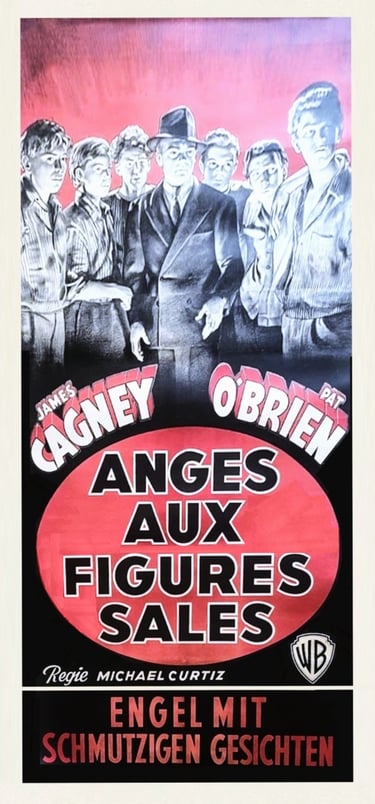
1938 Warner Brothers
CRIME SCHOOL
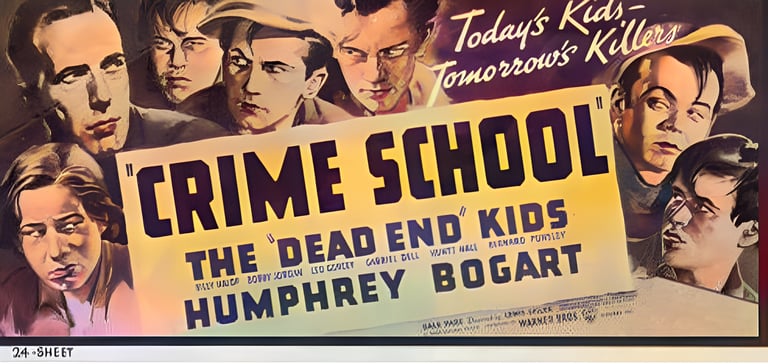
Six Sheet
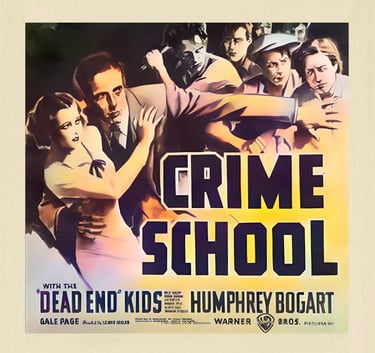
Three Sheet
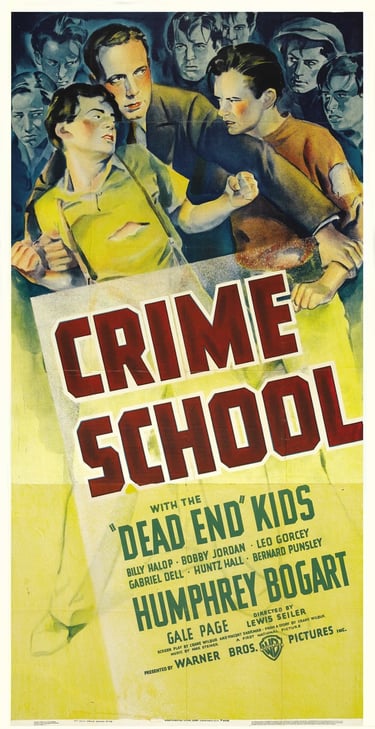
One Sheet
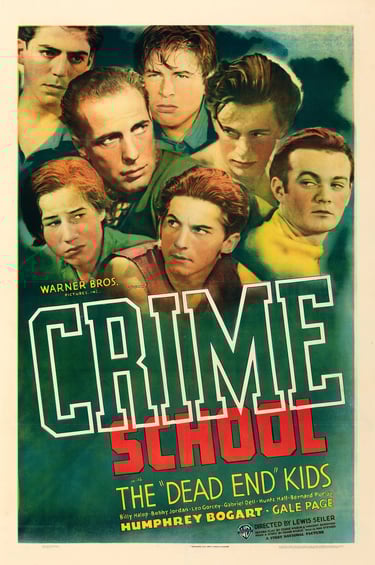
Half Sheets
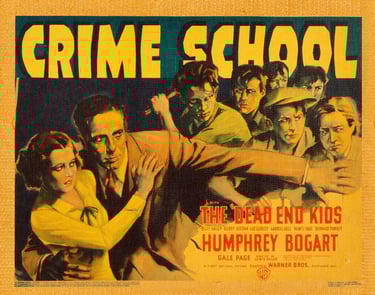
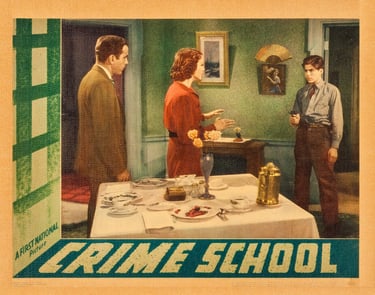
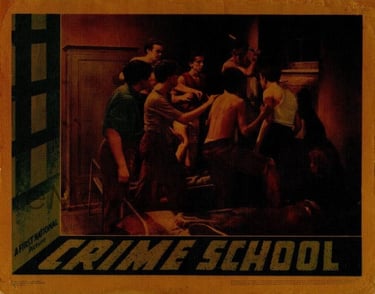
Lobby Card Set
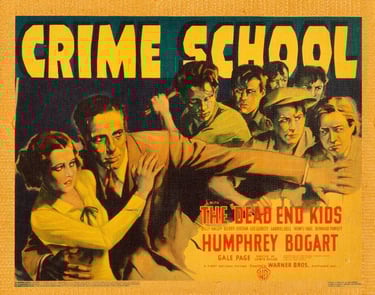
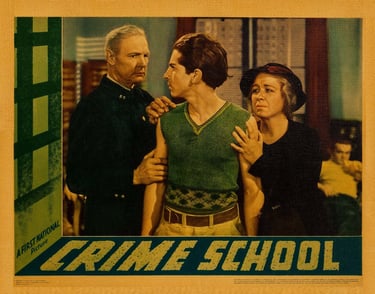
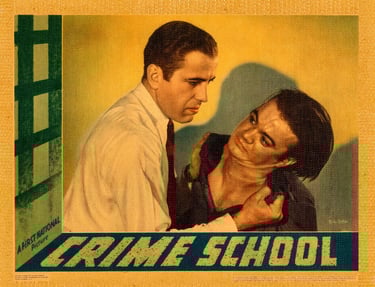
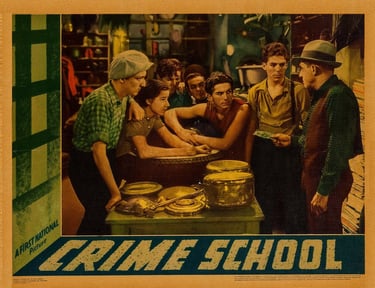
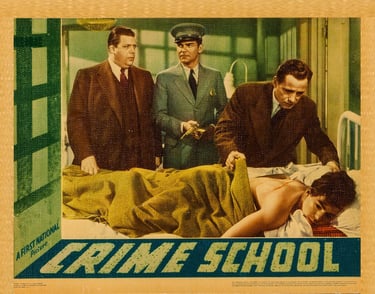
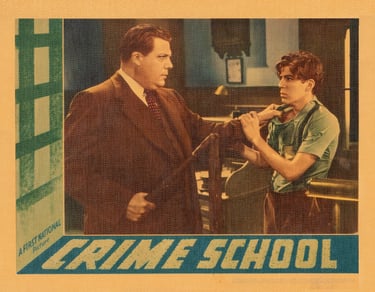
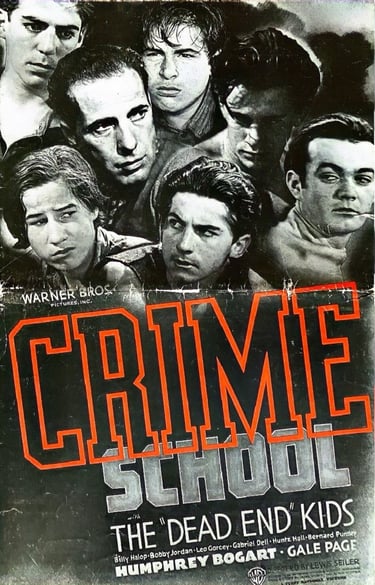
Pressbook
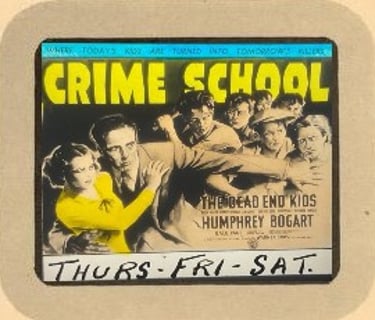
Slide
1938 American Display Company
American Display Company was a company based in New York City and from 1936 to roughly 1941, this company printed its own one-sheets and lobby card sets (and a very few inserts, half-sheets, three-sheets, 40x60s and stills) for three major studio movies (Warner Brothers, Paramount and United Artists, but no other studios). The items almost always feature a tiny legal disclaimer and cast credits only. The posters and lobby cards are from the original release of the movie, and almost always have completely different artwork from the regular studio release. Before it was discovered by noted poster dealer/historian Walter Reuben, collectors did not know the name of this company (and thought it to be located in the Midwest), and it is often referred to as the "other company" (and we will continue to refer to it that way, since collectors know it that way).
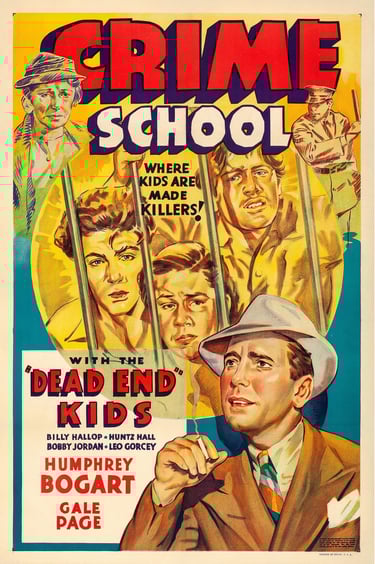
One Sheet
Lobby Card Set
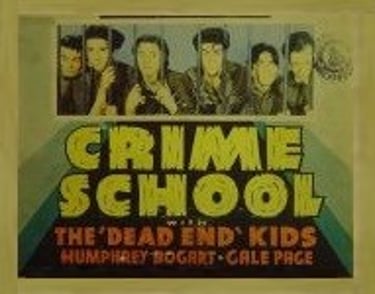
#2 Picture Needed
#3 Picture Needed
#4 Picture Needed
#6 Picture Needed
#8 Picture Needed
#7 Picture Needed
#5 Picture Needed
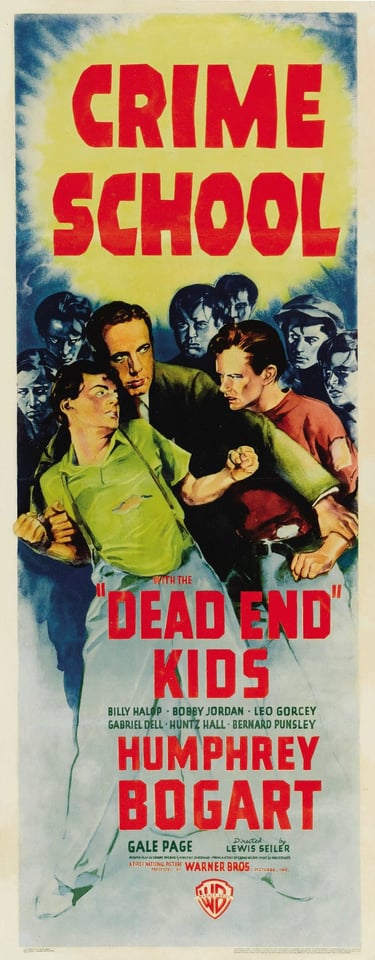
Insert
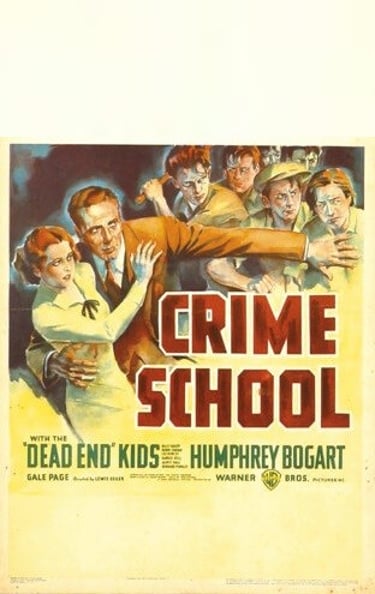
Window Card
Window Card MINI
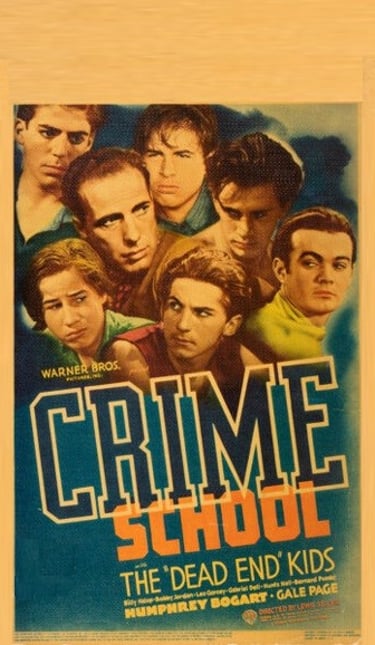
Computer Colorized
Computer Colorized
Computer Colorized
Herald
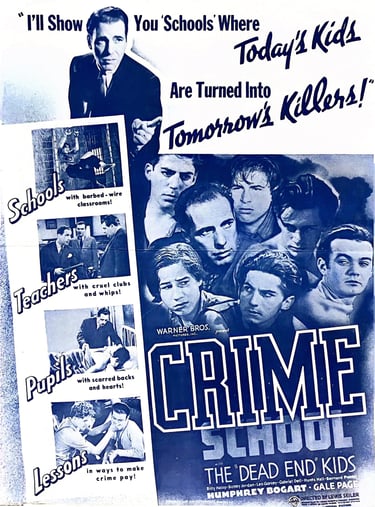
Window Card JUMBO
Action Display
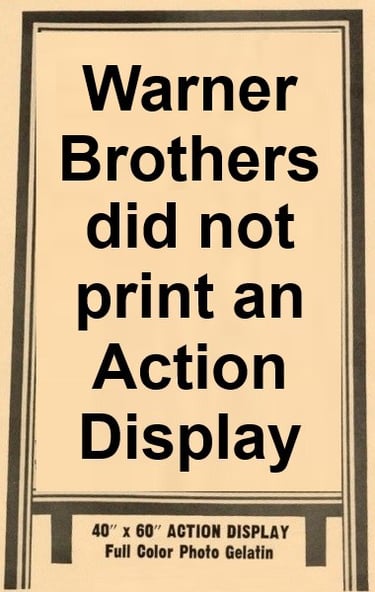
24 Sheet
Marquee Alert
VICTORIA THEATRE
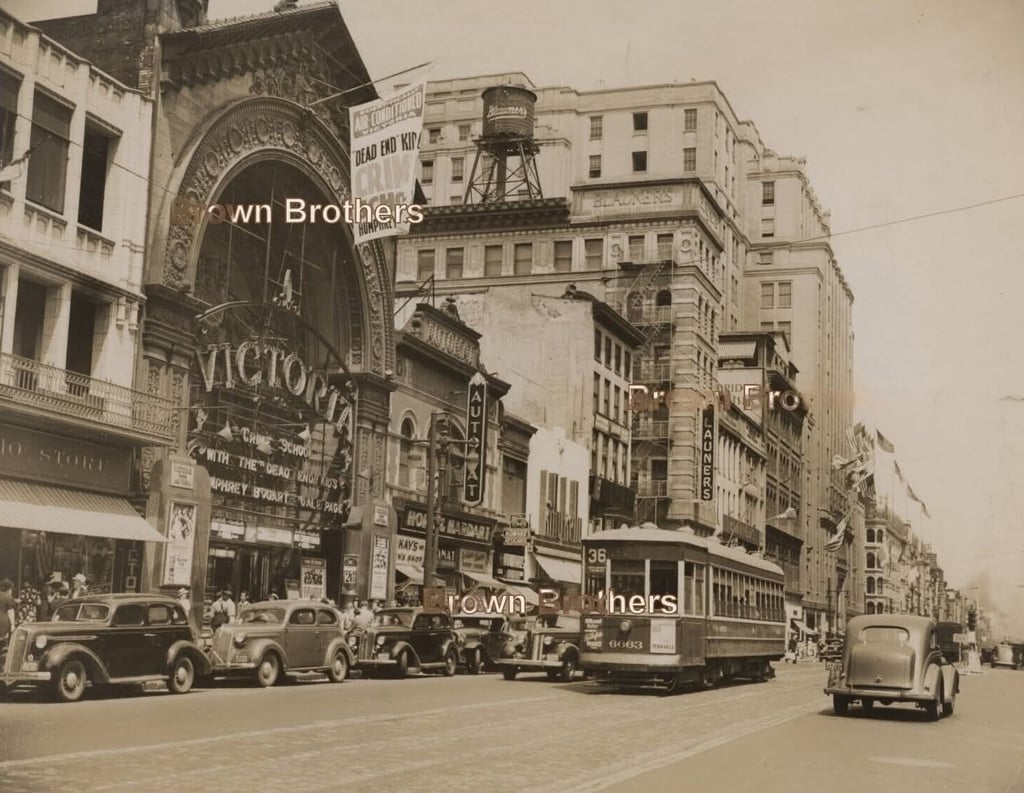
913 Market Street, Philadelphia, PA 19107
The Victoria Theater opened in 1909 as the Nicklette Theater. The architects were Stearns and Castor. By 1941 it was operated by Warner Bros. Circuit Management Corp.
The Victoria Theater closed in 1949 and was demolished in 1950
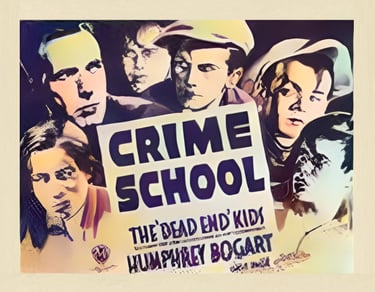
THEATER ALERT
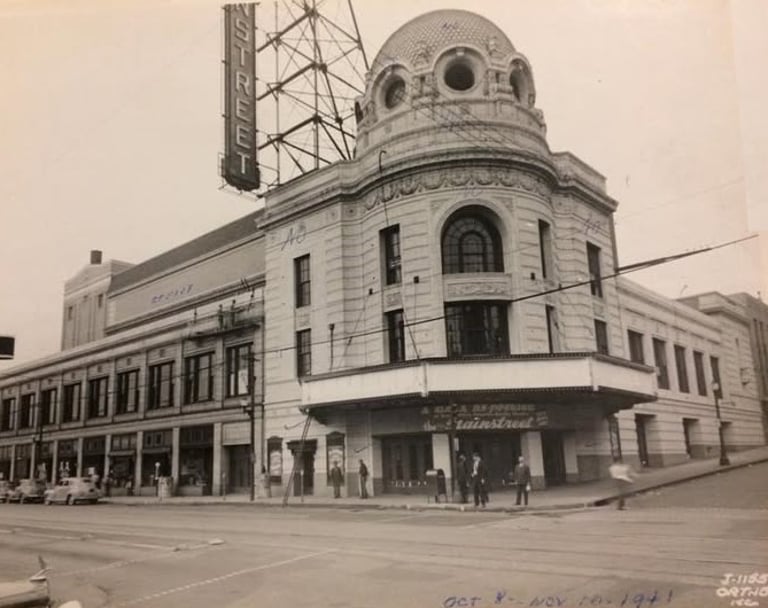
The Mainstreet Theatre
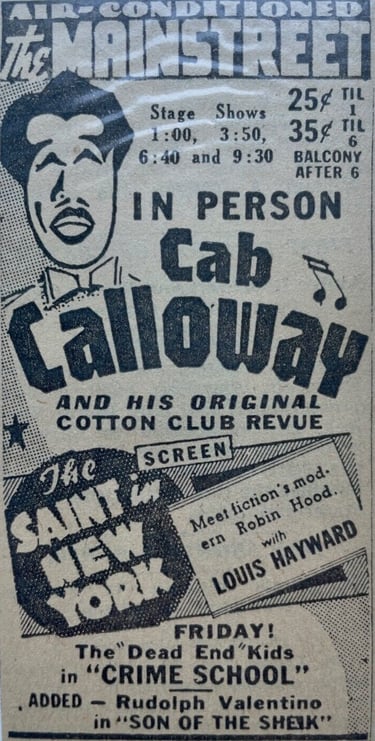
1938 Newspaper Ad
1400 Main Street, Kansas City, MO 64105
The 3,000-plus seat Mainstreet Theatre opened in October 30, 1921 with Conway Tearle in “After Midnight” on the screen and on the stage Eddie Foy & the Younger Foy’s in “The Foy Fun Revue” plus vaudeville acts. It was the only theatre in Kansas City designed by the Chicago firm of Rapp & Rapp. Its interior design was French Baroque style and the exterior a blend of Neo-Classical and French Empire styles. The lobby area is topped by a dome encircled by circular windows. In 1924 it was equipped with a Kimball 3 manual 10 ranks theatre organ.
It was the first theatre in Kansas City to contain a nursery for parents attending shows. The Mainstreet Theatre also featured an underground tunnel which connected it to the nearby President Hotel. Also, its basement and sub-basement contained space for animals used in the elaborate vaudeville shows put on at the theatre, including cages for animals as large as elephants (and elevators big enough to carry them up to the stage) and pools for seals.
From the time the Mainstreet Theatre opened until 1938, it was part of the so-called “Junior Orpheum” circuit, and among the famous names to play its stage were Charlie Chaplin and Cab Calloway, Harry Lauder, The Marx Brothers & Olsen and Johnson.
The Mainstreet Theatre closed for the first time in 1938, briefly reopened in 1941, and remained closed until 1949, when it was reopened by the RKO circuit, as a movie palace, called the RKO Missouri Theatre.
The Strand
1938 Newspaper Ad
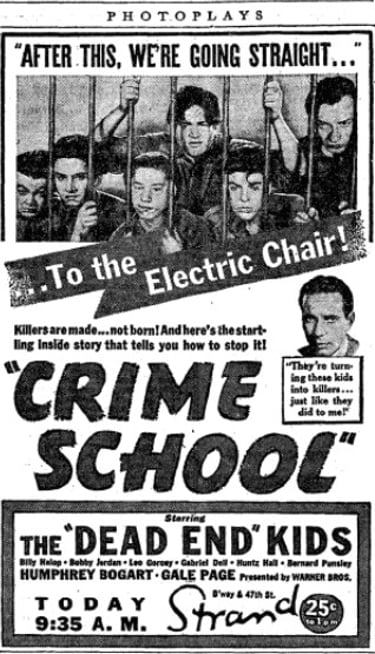
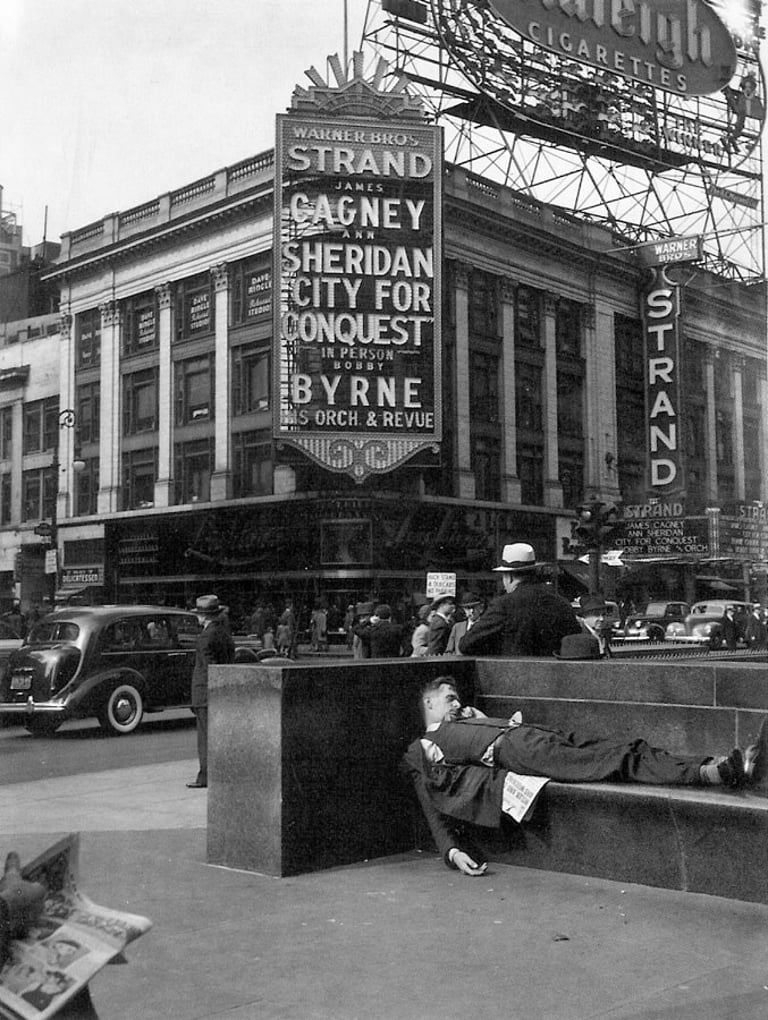
1579 Broadway at 47th Street, New York, NY 10036
The Strand Theatre was opened in 1914 for the Mitchel Mark Realty Company and was under the early direction of Samuel "Roxy" Rothapfel as the Mark Strand. Designed by Thomas W. Lamb, the Strand originally had a seating capacity of 2,989.
The Strand began its life with stage shows in addition to movies and also had one of the largest stages in the city in 1914. After stage shows were dropped in 1929, seating was reduced to 2750. In the late 1930's stage shows (and vaudeville) were brought back.
After dropping stage shows on July 3, 1951, the Strand was renamed Warner Theatre, and opened with "Stangers on a Train". During 1952 to 1953, the theatre closed, was renovated and renamed Warner Cinerama. Cinerama films moved here from the Broadway Theatre, starting with "This Is Cinerama" in 1953.
Unfortunately, on February 8, 1987, after a long and eventful life, one of the greatest movie palaces of New York City closed and was demolished.
FOREIGN MATERIAL
Three Sheet